
Trauma therapist. Former genomics scientist.

How people thrive —
and what gets in the way

I spent the early part of my career in genomics labs, where a claim was only as good as the data behind it. I've spent the rest of it as a trauma therapist, watching what actually helps people change. Here I bring the first habit to the second: what the evidence supports, how strong it is, and what it means in practice.

Sunrise over layered mountain ridges and pine trees

Research notes

Recent notes

One a week. Peer-reviewed findings in plain language, each labeled by how strong the evidence is.

Evidence: EstablishedTrauma & the mindOct 14, 2026

The willpower "muscle" didn't survive replication

Two large preregistered replications found the classic ego-depletion effect close to zero. Willpower is real; the idea that it drains like a fuel tank hasn't held up.

Hagger et al. 2016, Perspectives on Psychological Science 11(4):546–573
Evidence: SupportedPerformance & trainingOct 9, 2026

Exercise treats depression. The famous headline still overstated it.

Across about 1,000 trials, physical activity produced moderate drops in depression and anxiety. The "1.5 times more effective than medication" line came from a press release, not the paper.

Singh et al. 2023, British Journal of Sports Medicine 57(18):1203–1209

Evidence: SupportedThreat physiologyOct 7, 2026

ACE scores predict populations, not people

Childhood adversity raises risk across a population. As a forecast for any one person, an ACE score performs only modestly better than chance.

Felitti et al. 1998, American Journal of Preventive Medicine 14(4):245–258

All research notes →

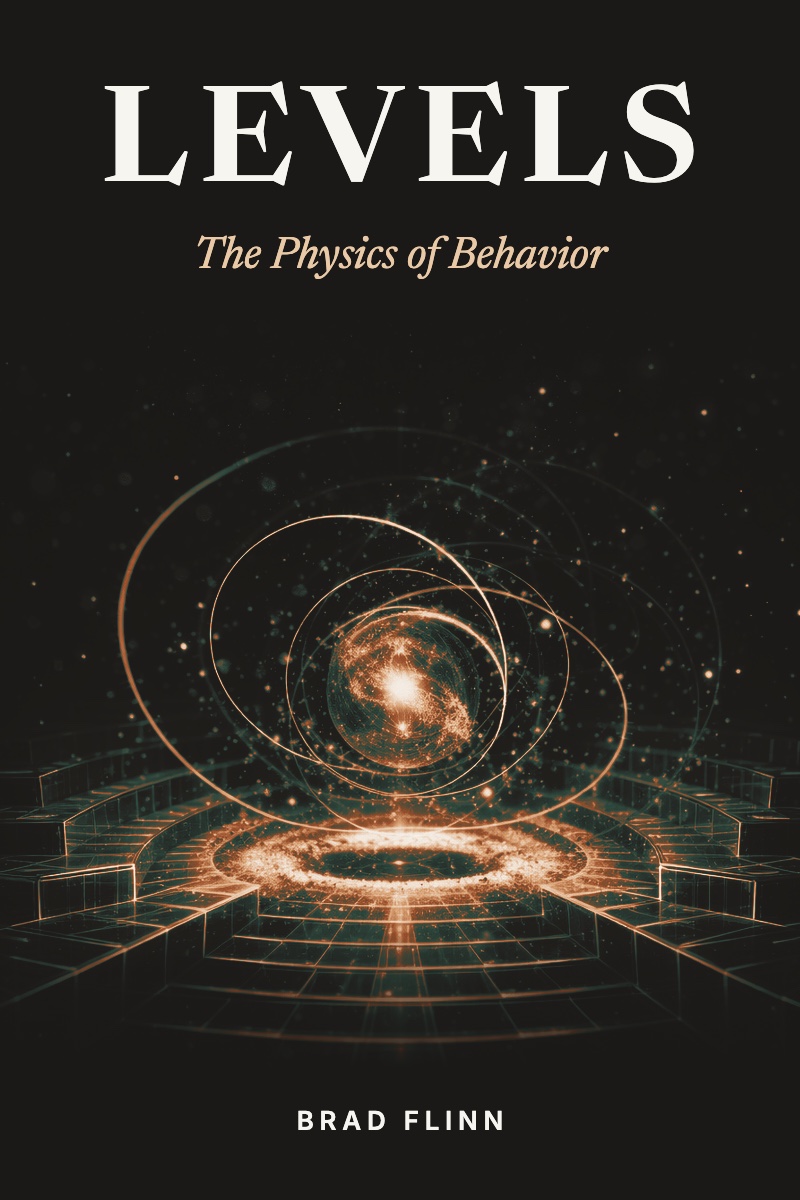
Working cover of LEVELS: The Physics of Behavior, by Brad Flinn
Working cover
Manuscript in progress

LEVELS: The Physics of Behavior

How behavior comes out of energy and constraint at every level, from physics to society, and why change becomes possible when the conditions change.

For readers of Robert Sapolsky, Bessel van der Kolk and Daniel Kahneman, and for clinicians who want mechanism under their methods.

About the book

The argument

Behavior follows conditions.

Behavior tracks the conditions it's built in: sleep, safety, money, history, habits, the people around us. Biology and temperament set the range. Conditions decide where in that range a person lands, and conditions can be changed.

Most of what I write comes back to one idea: when help fails, it's usually aimed at the wrong level. Find the level where the problem actually lives, change the conditions there, then build the reps.

More about me →

Work with me

  • Talks. Trauma, performance and the science of behavior change, for professional and general audiences.
  • Workshops for clinicians. Mechanism-first trauma and performance work.
  • AI consultation. Practical, safe use of AI in behavioral health practices.

Speaking & consulting

Looking for therapy in Grand Junction? Peak Performance and Wellness.

Newsletter

Conditions

Monthly. What new research says about how people thrive, what gets in the way, and how strong the evidence is.

You'll get one email to confirm. Unsubscribe anytime. Privacy.